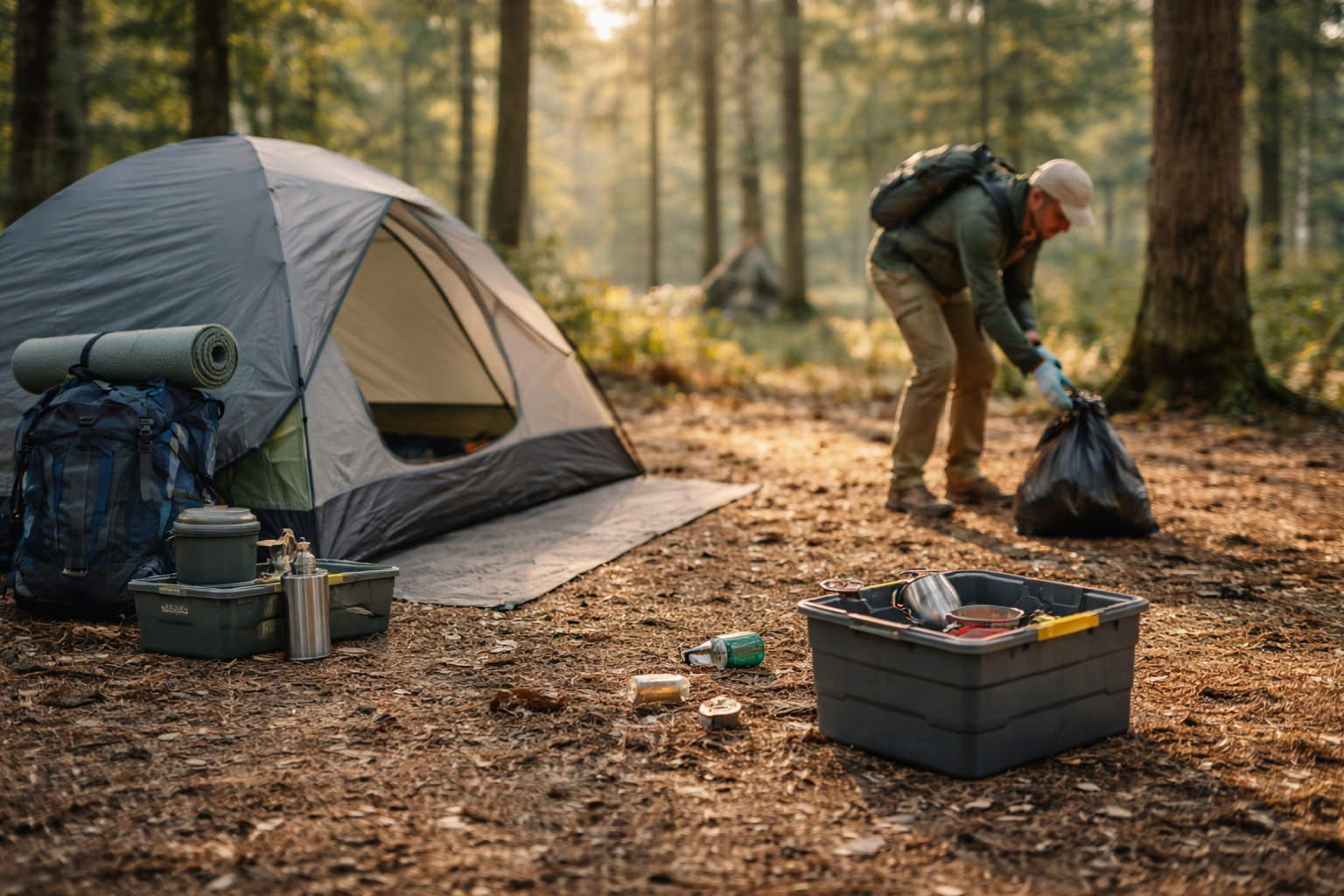
Most outdoor enthusiasts care about nature. But good intentions still create impact when millions of people visit the same places. Leave No Trace (LNT) is a practical way to reduce damage so trails, forests, and coastlines stay beautiful and healthy.
7 Essential Leave No Trace Principles for Your Next Outdoor Adventure
Principle 1: Plan ahead
Simple planning checklist
- Check weather and sunset time
- Know if your area has restrictions (fires, dogs, camping zones)
- Pack a trash bag and small zip bag for micro-waste
- Bring a trowel if toilets are not available
- Pack meals that do not create messy waste
Principle 2: Choose a campsite that can handle you
Pick durable surfaces
- Established pitches where allowed
- Gravel, sand, dry grass, or compact soil
Avoid:
- Wet ground
- Meadows with delicate plants
- Areas right next to water edges
Give water some space
Camp away from rivers and lakes (a good general rule is about 60 meters).
Principle 3: Dispose of waste properly
Trash: bring it all out
Yes, even “biodegradable” items like orange peels. Carry a dedicated trash bag and seal it.
Toilet waste: be prepared
If there are toilets, use them. If there are not:
- Go far from water, trails, and camp
- Dig a small hole if permitted
- Cover and disguise it after
Pack out toilet paper where required or recommended.
Micro-waste: the hidden problem
Use a small zip bag as your micro-waste container.
Principle 4: Leave what you find
Collecting shells, flowers, stones, or antlers can damage ecosystems. Take photos instead.
Principle 5: Minimize campfire impact
If fires are allowed
- Use existing fire rings where provided
- Keep the fire small
- Burn only small, dead, downed wood
- Fully extinguish with water, stir, repeat
Better alternatives
- Cook on a stove
- Use a warm layer and a hot drink
- Use a lantern for the vibe
Principle 6: Respect wildlife
Wildlife-safe habits
- Store food sealed and out of reach
- Never keep food in your tent if wildlife is present
- Keep cooking areas clean
- Pack out food scraps
Principle 7: Be considerate of other people
Simple campsite etiquette
- Keep noise low, especially after dark
- Avoid blinding lights
- Keep dogs controlled
- Share trails respectfully
Low-impact camping for campervans and car campers
Best practices
- Park only where permitted
- Use designated dump points for waste and greywater
- Avoid running engines or generators late
- Keep your setup compact
A quick “Leave No Trace” camp routine
- Walk your camp in a slow circle
- Pick up micro-waste
- Check the fire area is cold
- Look for food crumbs and scraps
- Restore the site
- Take one last photo of clean camp
Common myths
- “It is biodegradable so it is fine.” Often not fine.
- “I only left a little.” Small impacts add up fast.
- “Animals will clean it up.” It harms them.
- “Nobody will notice.” Nature notices.
Closing
Leave No Trace is about reducing unnecessary damage. Pick a durable campsite, manage waste, be fire-smart, and respect wildlife. When these habits become routine, your trips feel cleaner and calmer.